


How Long Does It Take to Charge an EV?
Electric vehicles are changing how drivers power up and plan their days.
But one of the first questions most shoppers ask is simple: how long does it
take to charge an EV? The answer depends on your charger type, your
vehicle’s battery size, and where you plug in.
Let’s break it down so you can plan your next electric adventure
confidently. For more guidance on EVs and charging options, visit Gary Yeomans Ford Frankfort.
What You Need to Know About EV Charging Time
Charging an electric vehicle (EV) isn’t the same as refueling a gas
car—it’s smarter and more flexible. EV charging time varies based on several
factors, including:
-
Battery size (kWh)
-
Charger power (kW)
-
State of charge (how empty your battery is)
-
Weather conditions
On average, it can take anywhere from 20 minutes to 10 hours to charge an
EV, depending on the charging level and power output.
A Full Breakdown of EV Charging Levels
Level 1 Charging – The Slow and Steady Option
Level 1 uses a standard 120-volt household outlet. It’s best for overnight
top-offs or plug-in hybrids.
-
Time to full charge: 8–20 hours
-
Best for: Daily commuting or low-mileage drivers
Level 2 Charging – The Everyday Solution
Level 2 chargers use a 240-volt outlet, often installed at home or
available at public stations.
-
Time to full charge: 4–10 hours
-
Best for: Home charging or long-term parking
DC Fast Charging – Quick Power on the Go
These stations deliver high voltage directly to your EV battery.
-
Time to charge: 15–45 minutes for an 80% charge
-
Best for: Road trips or busy schedules
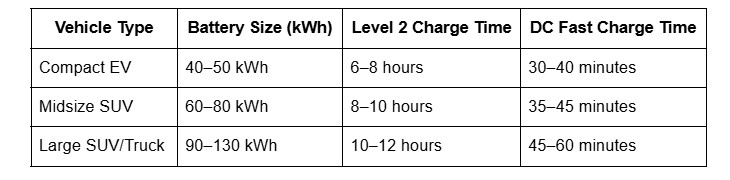
Average EV Charging Time by Vehicle Type
Factors That Affect Electric Vehicle Charging Time
Even with the same type of charger, your electric vehicle’s charging time
can vary due to several important factors. Understanding these details helps
you optimize your charging routine, protect your battery, and make the most
of your EV’s performance.
Battery Temperature
Temperature has a direct impact on how efficiently your EV charges. Cold
weather slows down battery chemistry, reducing charge speed, while extreme
heat may trigger battery protection systems. To maintain consistent EV
charging performance, try charging in moderate conditions or preconditioning
your battery before plugging in.
Charger Compatibility
Not every EV can take full advantage of a charger’s power output. Some
vehicles have onboard limits that affect how much power they can draw, even
from a fast charger. Checking your vehicle’s specifications and using
compatible EV charging stations ensures you get the best possible charging
speed.
Charging Curve
Every electric vehicle has a unique charging curve, meaning the rate of
charge changes as the battery fills up. Most EVs charge fastest between 20%
and 80% capacity, and the speed gradually slows after that to protect
battery health. Planning your charging sessions within this range can save
time and extend battery life.
Software and System Updates
Modern automakers like Ford and Tesla often improve charging efficiency
through software or over-the-air updates. These updates can optimize how
your EV manages power, temperature, and battery performance. Keeping your
vehicle’s software current helps maintain the fastest and safest EV charge
times possible.
Charging an EV at Home vs. in Public
Home charging gives you convenience; public charging gives you
flexibility.
-
Home charging: Plug in overnight and wake up to a full battery.
-
Public charging: Ideal for long trips or quick top-ups during
errands.
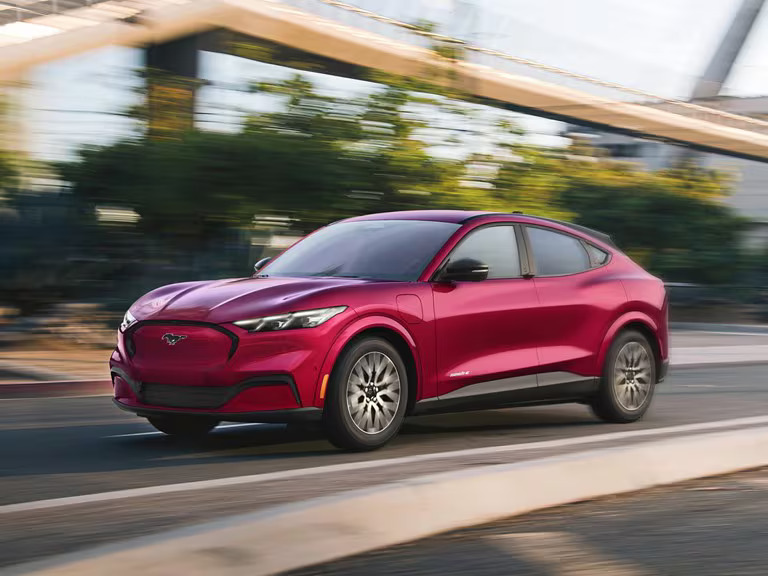
If you drive a Ford EV, like the Ford Mustang Mach-E or F-150 Lightning,
you can install a Ford Connected Charge Station for faster, smarter charging
at home.
Smart Ways to Shorten EV Charge Time
-
Use Level 2 or DC Fast Chargers whenever possible.
-
Precondition your battery before charging in cold weather.
-
Plan charging stops using in-car navigation apps like FordPass.
-
Charge during off-peak hours to save on electricity costs.
Thinking about going electric? Learn about our EV financing options and make your next Ford EV more affordable.
How Ford Makes Charging Easier
Ford’s BlueOval Charge Network gives you access to over 100,000+ public
chargers across North America, including Level 3 fast chargers. Through the
FordPass app, you can:
-
Locate nearby stations
-
Start or stop charging remotely
-
View real-time charging status
Whether you’re at home or on the road, Ford ensures EV ownership is
effortless.
Get Flexible Financing for Your Next EV
Transitioning to an EV is an investment in technology and savings. Our
finance team can help you take advantage of EV tax credits, low-APR
programs, and flexible payment plans.
Apply today through our online financing center and bring your dream EV home faster.
So, how long does it take to charge an EV? The short answer: it depends on
your charger and your vehicle, but the long-term answer is, less time than you think.
With home Level 2 setups and Ford’s expanding fast-charging network,
powering up your EV has never been simpler.
Visit Gary Yeomans Ford Frankfort
to explore the latest Ford electric models and discover how easily electric
driving fits into your life.
FAQs About EV Charging Time
How long does it take to charge an EV at home?
A Level 2 home charger can usually charge your EV in 6–10 hours, depending
on your battery size.
How fast are public DC fast chargers?
Most fast chargers can deliver up to an 80% charge in about 30–45 minutes
for compatible vehicles.
Does EV charging time change with temperature?
Yes, cold or extremely hot weather can slow charging performance.
Can I use any public charger for my Ford EV?
Ford’s BlueOval Charge Network connects drivers to compatible stations
across major charging providers.
What affects my electric vehicle charging time the most?
Battery capacity and charger power are the two biggest factors in how long
it takes to charge an EV.
0 comment(s) so far on How Long Does It Take to Charge an EV?